event
UCT-MARiS Seminar with Pete Convey
10 April 2026

Times
Fri, 10 Apr 26
13:00 - 14:00
If you have any queries about the event, please contact Leila Nefdt via email at leila.nefdt@uct.ac.za.
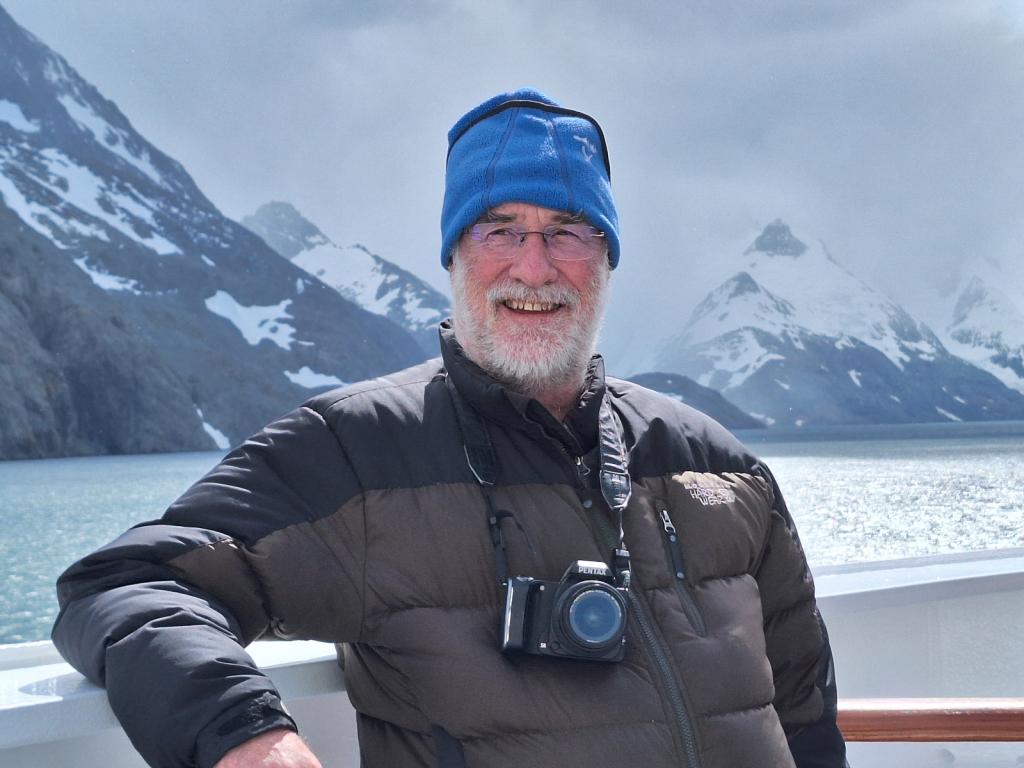
Peter Convey is a terrestrial ecologist with over 37 years’ experience with the British Antarctic Survey (BAS), including 27 Antarctic summers and one winter, and 26 Arctic field periods. He has diverse research interests, with almost 670 publications.
His interests include:
Peter obtained his PhD in Zoology in 1988 from the University of Cambridge. Throughout his career, he has been very active in the development of national and international Antarctic science priorities, in particular through the Scientific Committee on Antarctic Research (SCAR) where he has been in the leadership group for over more than two decades. Peter was awarded the United Kingdom Polar Medal in 2007, and is an Honorary Professor at the University of Birmingham, has been a regular Guest Lecturer at UNIS, Svalbard, and a Distinguished Visiting Professor of Polar Biology at the University of Johannesburg. He has long-standing and well received early career mentorship, engagement and presentation roles globally. The breadth of his international collaboration is exemplified by the extremely wide and global co-authorship of his publications, and also by his deliberate engagement both through his SCAR roles and other initiatives.
Abstract:
Terrestrial and freshwater life in Antarctica is surprisingly poorly known. Today it is dominated by lower plants and lichens, microarthropods and other microinvertebrates, and microbial groups, although that has not always been the case. Most currently ice-free ground in Antarctica and on at least some of the surrounding sub-Antarctic islands would have been covered and scoured by glacial advances at the Last Glacial Maximum and previous maxima. However, as new baseline survey data has become available, combined with modern molecular biological analysis, it has become clear that isolation, long-term persistence, and regionalisation are general features of the Antarctic terrestrial and freshwater biota. As well as creating a new paradigm in which to consider the evolution and adaptation of Antarctic terrestrial and freshwater biota, important new cross-disciplinary linkages have opened in the fields of understanding the geological and glaciological history of the continent itself and its neighbouring landmasses, and of the climatic and oceanographic process that can both lead to isolation and support colonisation processes. This new and more complex understanding of Antarctic biogeography also provides important practical challenges for management and conservation in the region as is required under the Antarctic Treaty System, in the face of growing human activity and impacts, and of considerable regional climate change.
In this seminar, Peter will focus his talk on many of these concepts in the context of a career that has given him the opportunity to visit many and disparate parts of Antarctica and the peri-Antarctic regions, and work with collaborators and now friends across multiple nations and cultures.